…Facility Placement
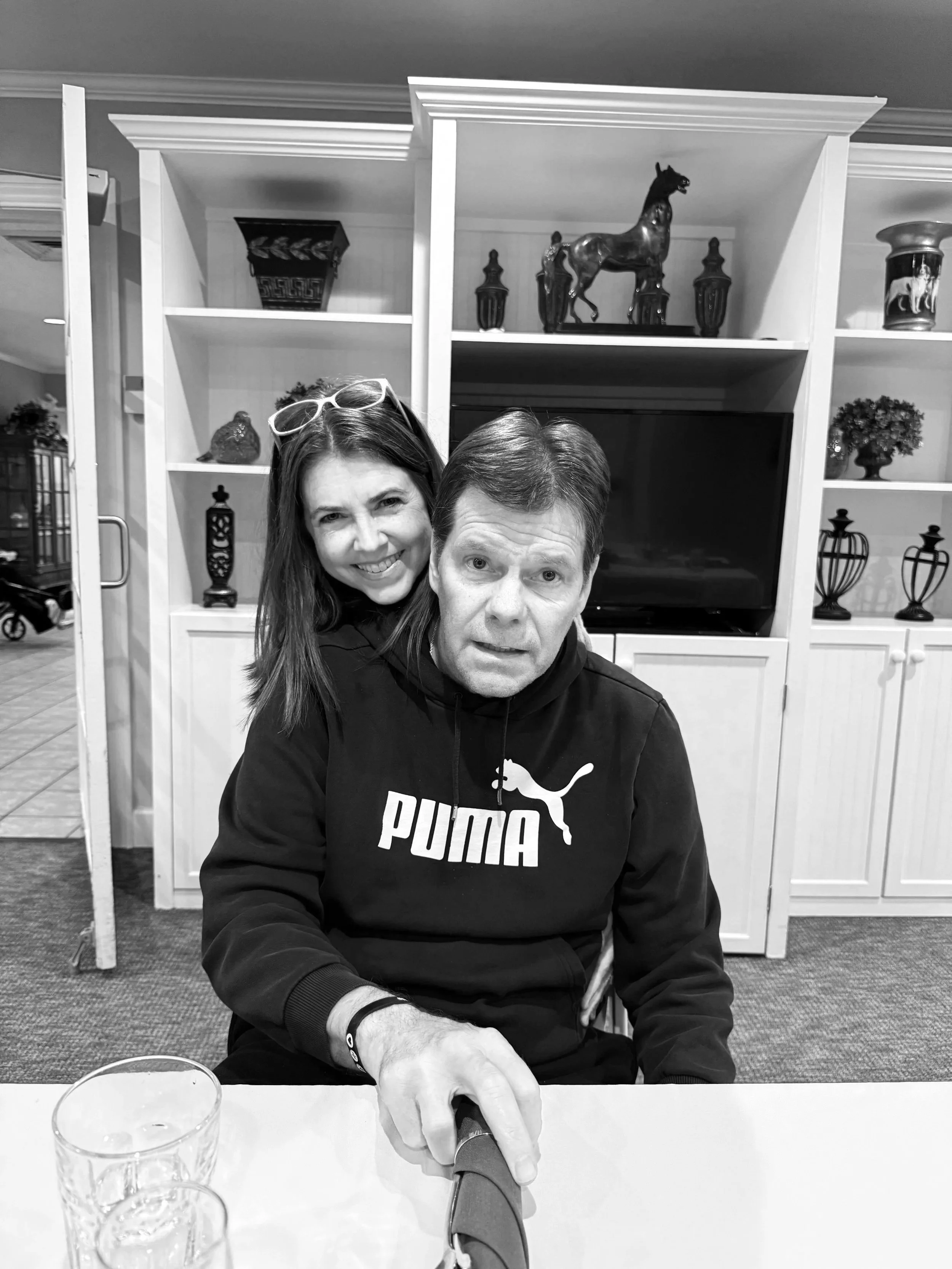
Making the decision to place my 62 year old husband with behavioral variant frontotemporal degeneration into a memory care assisted living facility was the hardest decision of my life. We got the diagnosis in July 2023, and 10 months later I moved him into a facility. It’s a decision no one wants to be faced with. But the reality was that our home was no longer safe for my husband, our two young children, and myself. Although I didn’t want it to be this way, I was no longer making decisions for one person, I was making them for 4 individuals and that is a heavy role.
It’s hard. No one wants to admit that they can’t care for their person anymore at home. I acknowledge I’m fortunate that we can afford care in a facility; most people can’t. I’ve learned so much from our experience and hope this will help someone.
Before the move:
Start looking into memory care facilities before you actually need it.
Oftentimes there is a wait list, especially for the best places.
Enlist the help of friends/family members to visit facilities and weed out the winners and losers - the ones that are worth your time to visit.
Every person with FTD is different, and depending on your person you will know if you should tell them that it’s time for memory care. For my husband, the kindest thing I could do for him (knowing he was prone to worry) was to not tell him until we were already in the car and on our way to his new home.
Ask friends to help you get the room ready. Don’t be afraid to ask. I’ve found that most people are happy to help.
Depending on the stage of disease, make a big wall poster with information about your loved one and pictures that go along with it. Staff will get to know your person from it. I made one for my husband once he was no longer talking.
Frame the narrative with a positive spin - I told him that I’d found a place for him to live for a while, and that things at the house had become so difficult for him and the kids, and that this would be a nice break for him.
Expect your heart to break and to feel horrible about your decision. I took him to his room and he slowly looked around and took it all in. After 5 minutes he asked if we were going to go home. Every time he asked I’d say, “Well, we’re trying this out for a while and will see how it goes.” It felt awful every time. But after some time he stopped asking.
After the move:
Visit often, on different days and times. Show staff that your loved one has someone checking on them often. Keep them on their toes!
Learn staff names.
Get to know other residents and the families that visit them. This is your loved one’s new home and you’ll be there a lot. Take an interest in those around you and your loved one.
Don’t be afraid to cry in front of people. They get it. No one wants to move their person into a facility and it’s hard to visit, it may be the hardest thing you do. But we can do hard things, and we do it because we love them . If you’re able to open your heart up you will fall in love with other residents, and the bonds you form with them and their families will be some of the most meaningful relationships of your life.
Look at the activity calendar ahead of time and plan your visits with the intention to participate in an activity with your person.
Expect to cry - all the time. The first few months after placement I cried every night. I missed my husband so much and felt incredibly guilty for moving him. Even though I knew that I had to do it, the guilt and sadness was heavy. I learned to remind myself that it’s not my fault, it’s stupid FTD! It’s not my fault that he wasn’t safe at home any longer - it’s FTD. It’s not my fault that he is one of the youngest residents at the facility, it’s FTD.
Moving my husband into memory care assisted living was the most difficult decision of my life, but it was the right decision. For him, for me, for our children. It was a huge adjustment for our family and you won’t know how it feels until you’ve experienced it. We’re coming up on 2 years in memory care. Everyone knows my husband there, and I know every resident. I love that the facility is a safe place for him. He can safely walk all around the building and in the enclosed outdoor area. There is no judgment of others because everyone there has a brain impairment and they are treated with dignity and kindness. I love the residents - and go out of my way to stop and say hello to them and tell them how nice it is to see them, and give a compliment about what they’re wearing. The hardest decision was the right decision. But remember - you won’t know until you make the move, and if it doesn’t work out you can move your person back home or to a different facility. And I can tell you this, it is going to be ok. You’re going to be ok.